Tuesday, September 29, 2015

Peaking Intrest

Readers.  Very interesting people these are. Readers. They take time out of their day to enjoy words and pictures.  Non-readers, very interesting these people are. They don't value their time enough to take some of it and explore the words and pictures.  And yet the world if full of both of these interesting people, those who do, those who do because they have to and those who don't because they can't or won't.  So what makes someone a reader or non reader?  As a Kindergarten teacher I kind of have the inside scoop from the beginning. There are students whose parents read to them and these kids love story time, and there are students who are not read to and are so excited to be a part of something new and then there are those who aren't read to and just look at the class not understanding the reactions kids have to stories.  So how to get these students, these non readers to want to read or at least enjoy our reading experience?  I decided to survey a student who I knew for sure was read to a lot and enjoys our reading time.  He likes books that are funny and surprisingly he likes books about severe weather.  Scary books are cool to for him and he was quick to tell me he gets scared by scary books but not to scared.  The only difficulty he has with reading he says is trying to figure out what the words say (but in Kindergarten that's the case for most of my kids).   Reading is fun for him and he likes the pictures especially of tornadoes and hurricanes. He wants to read so that he can read to his baby sister and tell her what to do if there is a hurricane. It was refreshing to see a student who at a Kindergarten level was as much into books about weather as he was about humorous books that made him laugh.  After our discussion and the completion of the reading interest survey I found myself choosing books for him that I might not otherwise have chosen for a Kindergarten student.  Many of the books are science based in the sense that they explore extreme and normal weather conditions.


Dorion, C. (2011). How the Weather Works New York: Templar

For a young reader already fascinated by weather or any reader curious to know what is going on out there and how will it affect them this is a great book.  Add the fact that it is a pop-up book and kids can pull tabs and watch the pictures come alive and young readers are likely to have a good time exploring the book and thinking about the weather.


Rockwell, Anne. (2008). Clouds New York: Harper Collins

In many urban areas kids may not have the chance to go star-gazing but perhaps they can look up to clouds and learn to figure out or predict weather patterns.  This book will especially appeal to kids who already have a fascination about the weather. 


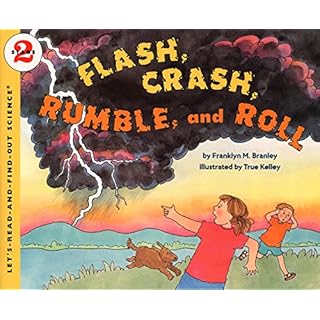
Flash, Crash, Rumble, and Roll


Branley, F. Flash, (1999). Crash, Rumble, and Roll New York: Harper Collins

Lightening strikes and kids and adults wonder where it came from and what to do.  This book is an entertaining and informative. It does not sugar coat the dangerous consequences of being struck by lightning or stray away from important safety precautions but it does deliver the material in a way that will fascinate and inform young readers.


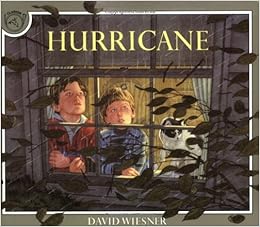
Wiesner, D. (2008).  Hurricane New York: HMH Books for Young Readers

While this book is not informational in the sense that explains the causes of hurricanes it does have the hook of young brothers preparing for and living through the after effects of a hurricane.  The boys fall in love with a fallen tree and use their imagination to play and make the tree part of their play.  They become heartbroken when the tree is cut away and cleaned up but continue to imagine other trees falling as reports of another weather storm brew.


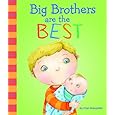
Big Brothers Are the Best (Fiction Picture Books)


Manushkin, F. (2012) Big Brothers are the Best New York: Picture Window Books

I chose this book for my student because he mentioned that he was a big brother to a baby sister and that he wanted to learn to read so that he could read to her. Many young students find themselves suddenly big brothers or sisters.  Still learning themselves they find themselves put in situations where they need to be the older more responsible sibling.  This book offers examples and behaviors for young readers regarding how to be the best big brother.


Monday, September 14, 2015

An endless flow of experiences

I'll start with a phrase.."An endless flow of experiences"

Sum it up, define it, direct it, dissect it, transform it, adapt to it, affect it, be affected by it...live it. And what is "it'? "It" is life, the endless flow of experiences that constitute our existence. Each one of us exist to experience.  There are those who lived amazing lives, they laugh and cried, struggled and endured and we may never know the details of their lives but we know what elation and degradation are, we know the difference between the burning sting of tear and tears of joy and we know not just of our own path but the path of our brothers and sisters because of the stories we read.  Life is our (mankind's) story.  Everything is a story. When we can understand that life is our story then we can greater appreciate the value of good literature.  Good literature changes the world in the way that it connects the reader to experiences and identities that they may otherwise never have a chance to connect to at the same to making the reader's personal experiences less solitary.  "When a story is so convincingly written that readers feel as though they have lived through an experience or been in the place and time of that story, the book has given them a valuable personal experience that takes them beyond the constraints of their current lives." (Lynch-Brown et al., p. 7).  My name may not be Gatsby and I surely was not around in the 1920's but I do know how it feels to be gossiped about and can account for many hours wasted trying to impress the wrong crowd.  So when I read the story of the tragic Gatsby I empathize with him, as many loyal Fitzgerald readers would.  I read the story many times and over and over, I try in mind to convince him to take another course of action even though I know that words written are not meant to change.
But those words can change me and I saw myself in him through the story, my life on a whole other scale still emulating his and I become empowered with knowledge and insight. Then I take that story, that life tale, fiction or real it doesn't always matter, and I share it with my students and my sons and watch them as they read and mouth "No, don't" to our friend Gatsby and then we share. We share. The word: "Universality".  Connecting, referencing, remembering.  Good stories strengthen our bonds.  "Literature helps children gain an appreciation of the universality of human needs across history, which makes it possible for them to understand what connects all of us as human beings as well as what makes each of unique." (Lynch-Brown, et al. p. 7). As an educator, I try to select texts that are rich in quality and content.  When I taught high school I wanted my students to relate to the frustration and drive Kino of The Pearl feels as he tries to protect his precious pearl and his family.  In kindergarten, I want my students to relate to the frustration and drive the Pigeon feels as he continuously yearns for objects out of his reach in the Pigeon series books by Moe Willems.
 Therefore, a sentence worth repeating is "The best children's books offer readers enjoyment as well a memorable characters and situations an valuable insights into the human condition."  (Lynch-Brown et al., p. 5).  It's with books like these that promote the reader to connect to the character that literature can be used across the curriculum.  When reading The Pearl students also learn about the time period, social injustice and degradation of the oppressed people Kino represents.  When reading the Pigeon series the class talks about the physiology of a Pigeon and whether or not a Pigeon  could drive a bus or should eat a hot dog. As readers read their connections grow.  The more stories they read the more stories they have to tell and this in turn improves their writing.  With exposure to quality text they are more likely able to produce quality text.  The benefits of reading are boundless and yet so many schools struggle with building literacy scores, reading comprehension and fluency.   This may in fact be due to an increase amongst our entire population in the use electronics or time spent on social media.  Although enticing much of the time spent using these devices leaves the user void of any substantial experience worth sharing. A society where people spend more time watching big screen televisions  and less time reading or sharing their experiences is reminiscent of the set up in Fahrenheit 451.  The tragedy of that stories characters were that so many of their lives were empty because they didn't read and so didn't have stories.
Wednesday, September 9, 2015

  • Hello there! My name is Susan Saab and no, sadly, I am not in anyway associated with SAAB automobile manufacturers.  While the auto industry never really spoke to me, the field of education is where I work to better the lives of my students as well as my own life. I am a Kindergarten teacher in North Bergen. There are two reactions when I tell people I teach Kindergarten. The first, "Oh my god, they must be so cute and small and you get to be like their mommy right? And you sing songs all day and play! How cute!"  The second, "KINDERGARTEN!  How do you do it?!! They are so small and they cry and they always want to hug!  I could never deal with kids that small". Ironically, I never really think about how "small" or young my students are. My role is to teach people and my class is full of the  people entrusted to me to educate. When I send my own three sons, ages 17, 14, and 13 off to school (I won't even get into the reactions I get when people know I have three teenage boys) I am entrusting that they are educated every day.  That's the thing about teaching, it is in essence a trust between one and their students as well as a trust between the teacher and the parents.  We (educators) are entrusted with the task of teaching our students to read (one of my most favorite hobbies) and calculate (one of least favorite hobbies) and most importantly to think (interesting fact #1...I think way too much). Then we ask our readers, calculators and thinkers to function and participate in society, hopefully to such a degree that society is a better place because of their involvement. This is my goal and what I expect to be better at as a Reading Specialist because everything is reading (we can save that topic for a future blog). I expect the course I am currently enrolled to build my array of strategies to teach literacy and critical thinking. I expect the course help me use literature to help students explore word play, ideas, concepts, principles and possibilities. 

  • Me and the boys